Antarctica 1996-1997
Hover over images to enlarge them and read captions. To request high-resolution copies, email rbarkerbisbee@gmail.com with the image numbers.
Around McMurdo
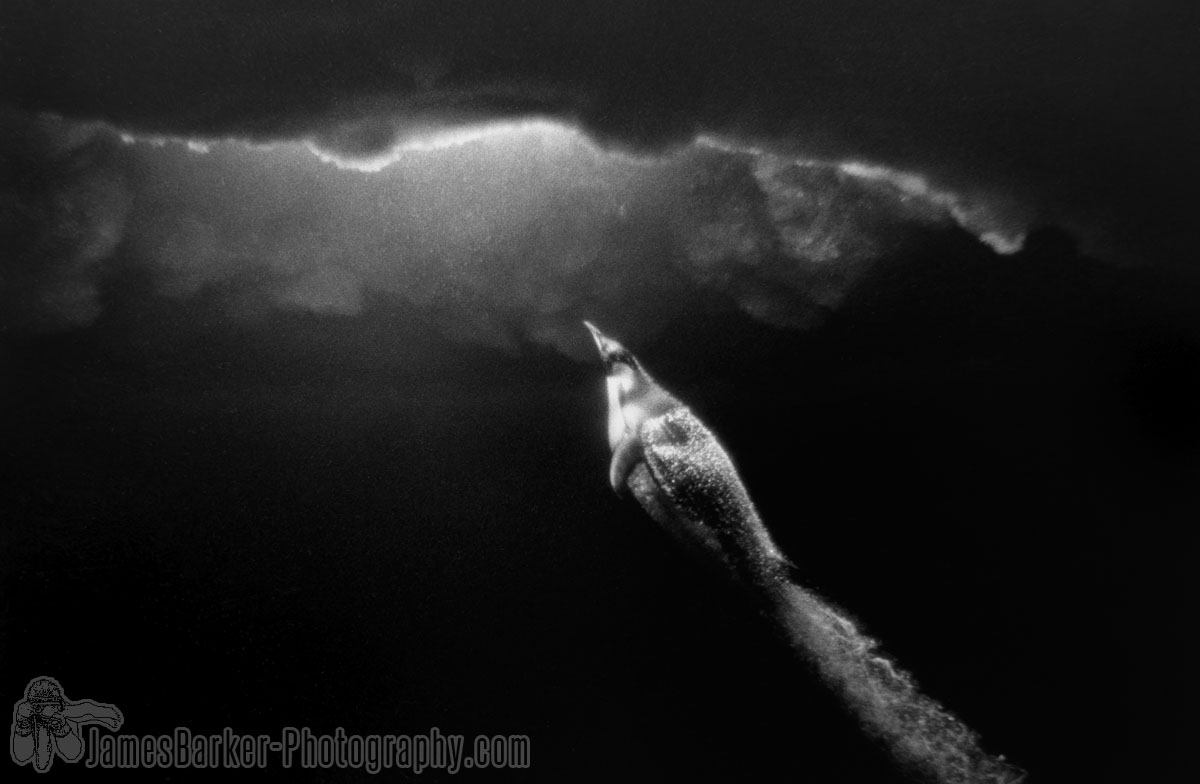
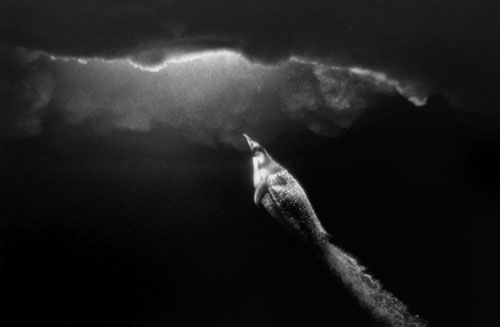 From an underwater viewing station, a penguin heads to the surface. The “contrail” is more visible than the scientists had been able to photograph. It solved the question as to how the contrail is formed, from air kept under the feathers, not the lungs. The photo appeared in a scientific journal article.8868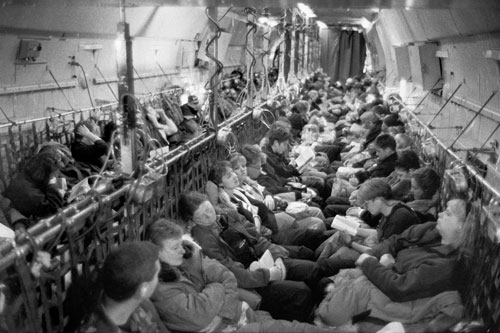
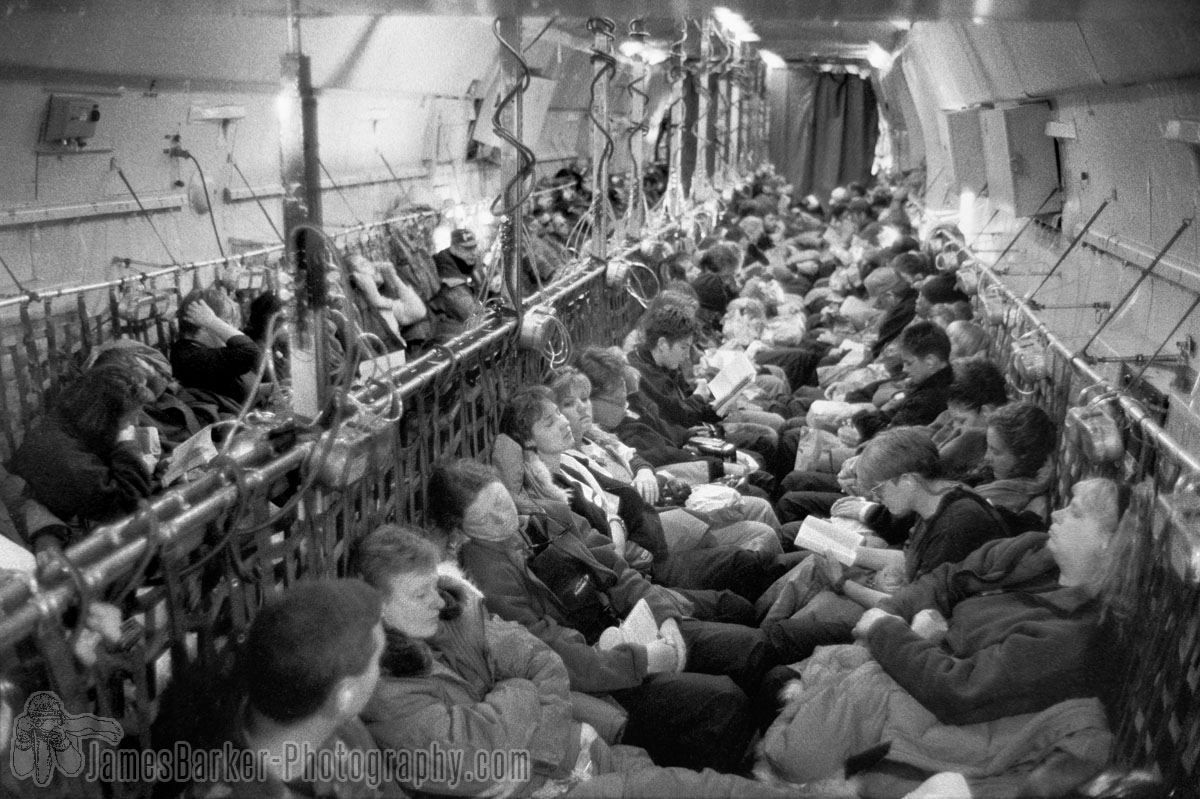
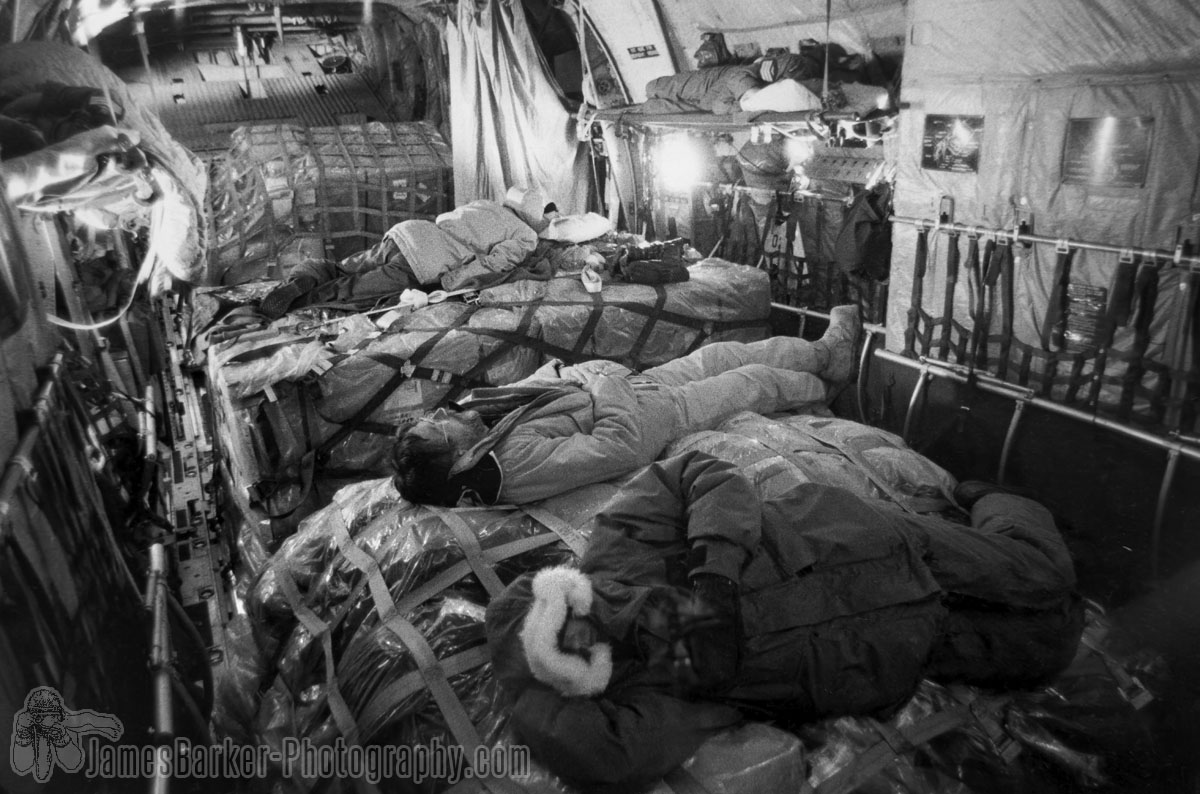
In an Air Force C-141, 132 scientists and support staff make the 5 1/2 hour flight from New Zealand to McMurdo Station. Dressed in "extreme cold weather" gear, the women are seated in front so they can use the crew facilities under the flight deck. Men are in back so they can use the funnel behind the curtain.
“Just as the plane touched down you could look at all the people and see the excitement in their faces. I thought, ‘finally I’m getting to a continent before my father’.”
—Anna Meade, hazardous waste specialist“As soon as I heard about the place I wanted to come. But I didn’t want to know anything about it on the off chance that I wouldn’t make it here. It would be worse to know how amazing it was and not come. I’ve got a huge collection of books now.”—Dr. Simon Hart
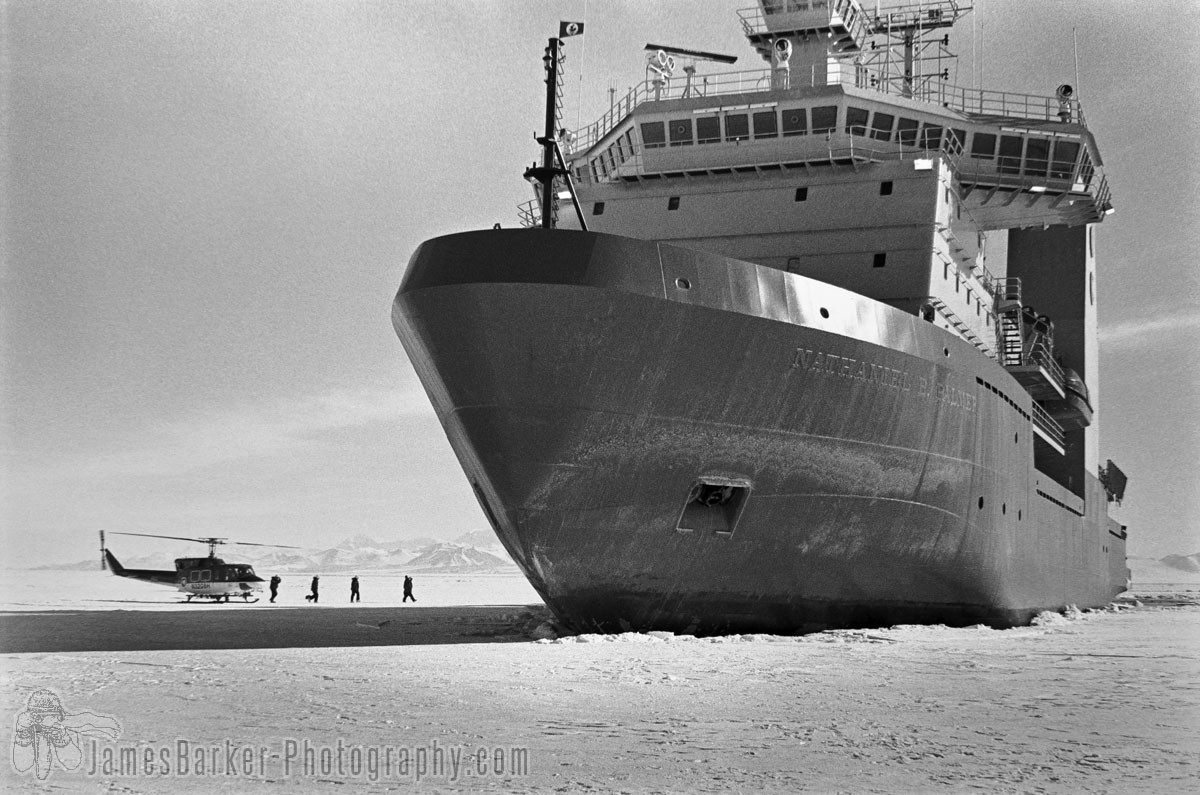
8870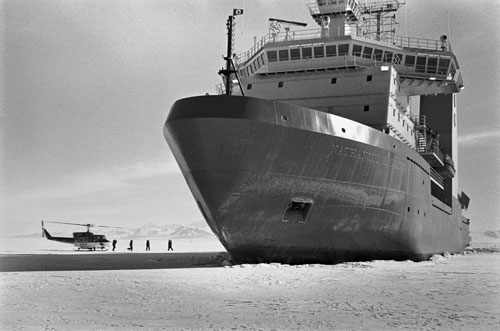 A replacement science crew joins the research vessel Nathaniel B. Palmer at the ice edge off Cape Royds in McMurdo Sound.8888
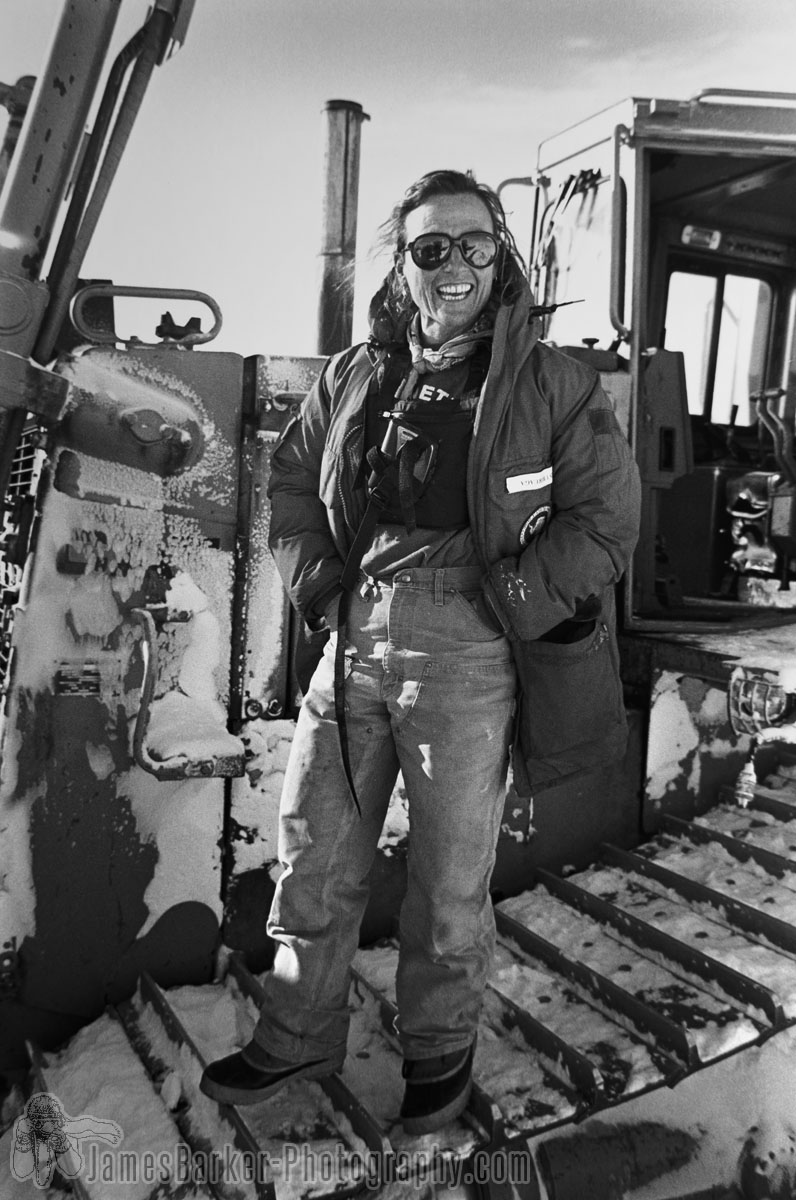
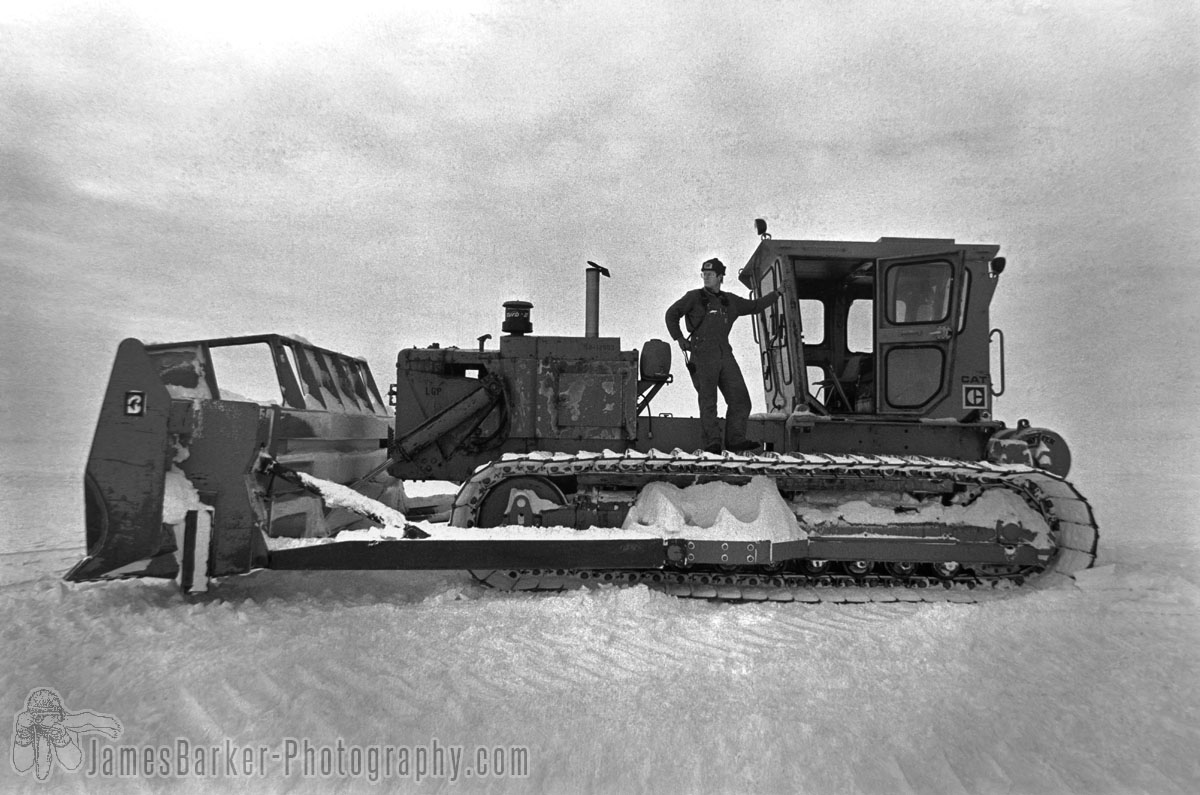
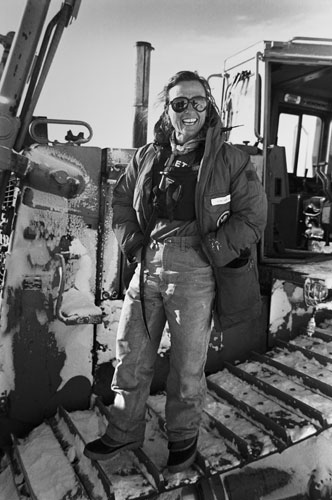 “It’s strange. At home in Idaho I do everything natural. I bicycle, I hike, I climb mountains, I canoe. But down here I drive Cat.”
—Jules Uberuaga, at Williams Field, Ross Ice Shelf8879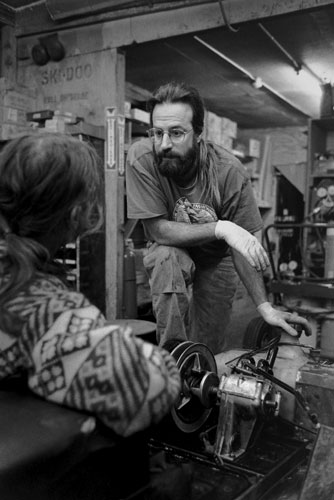 Andy Young teaches field maintenance of Skidoo snowmobiles at McMurdo.
“I learned a bunch of lessons from the Eskimos on Baffin Island in the middle 70s when I worked there. These guys were wizards. One of the best tricks I learned for real cold operations: if the Skidoo won’t fire up, just drop your zipper and pee on the carburetor throat. That warms the carburetor up. That’s step one.”
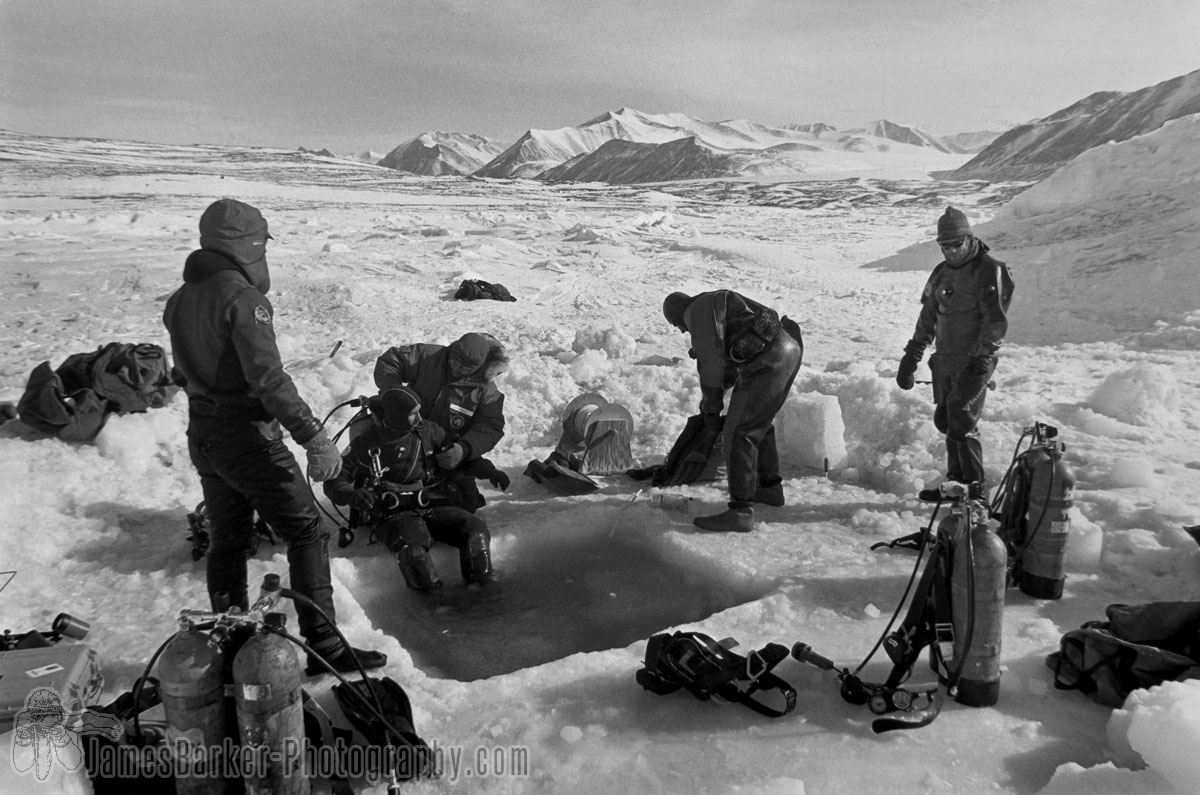
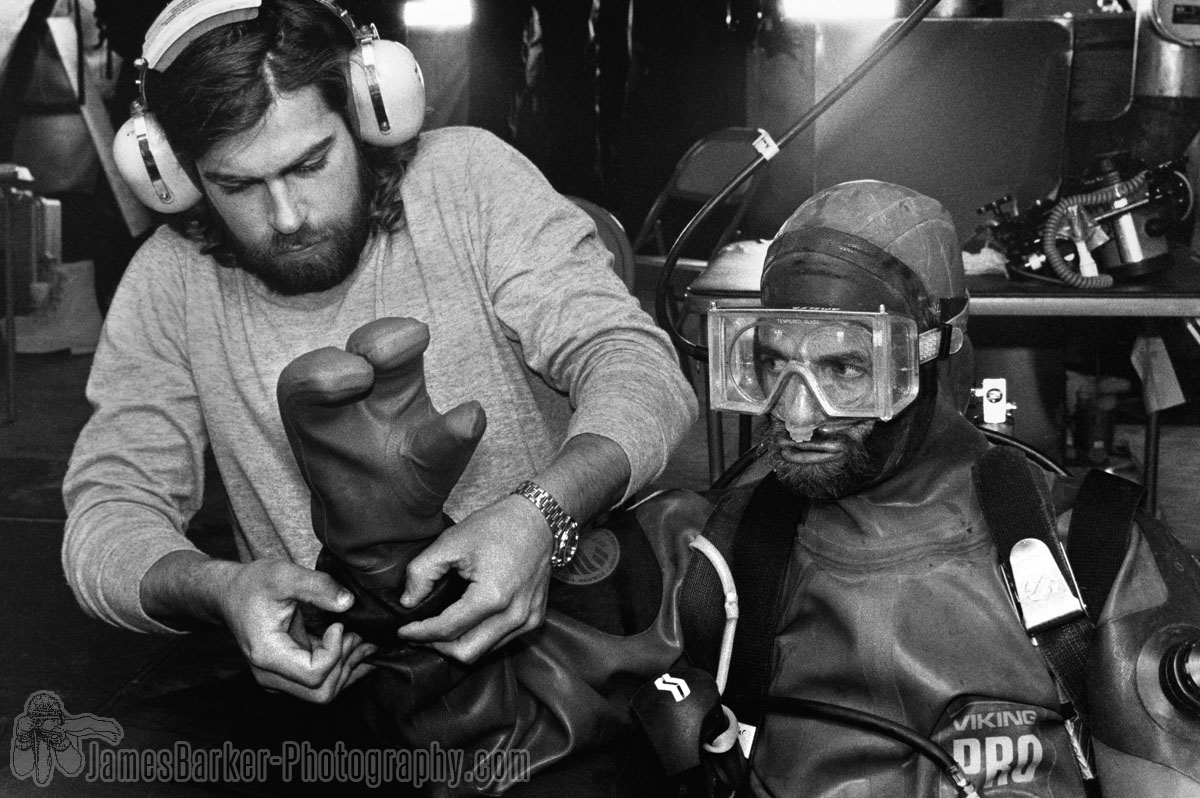
—Richard Flanders8875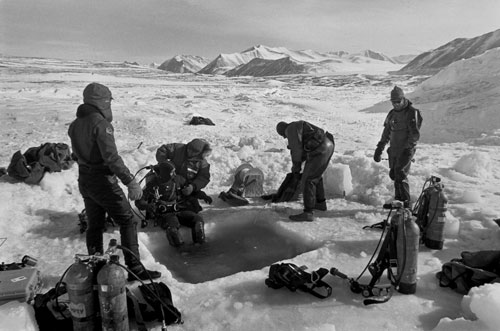 Scientists prepare for research under the ice.8891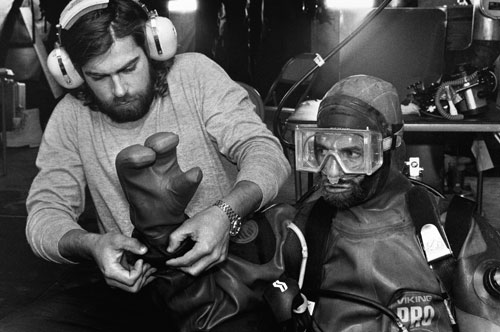
Chris Moeller helps prepare Chuck Amsler, who will descend beneath the ice at New Harbor at McMurdo Sound.
“Deep sea species live close to the surface here, because the water is cold, just like the deep sea, about 28 degrees F. So that gives us scuba divers access to animals that we would need a submersible to withstand the depths further north. Many of the animals that live in the seabed here are also unusually large, which is a consequence of their slow growth induced by infrequent food availability.”
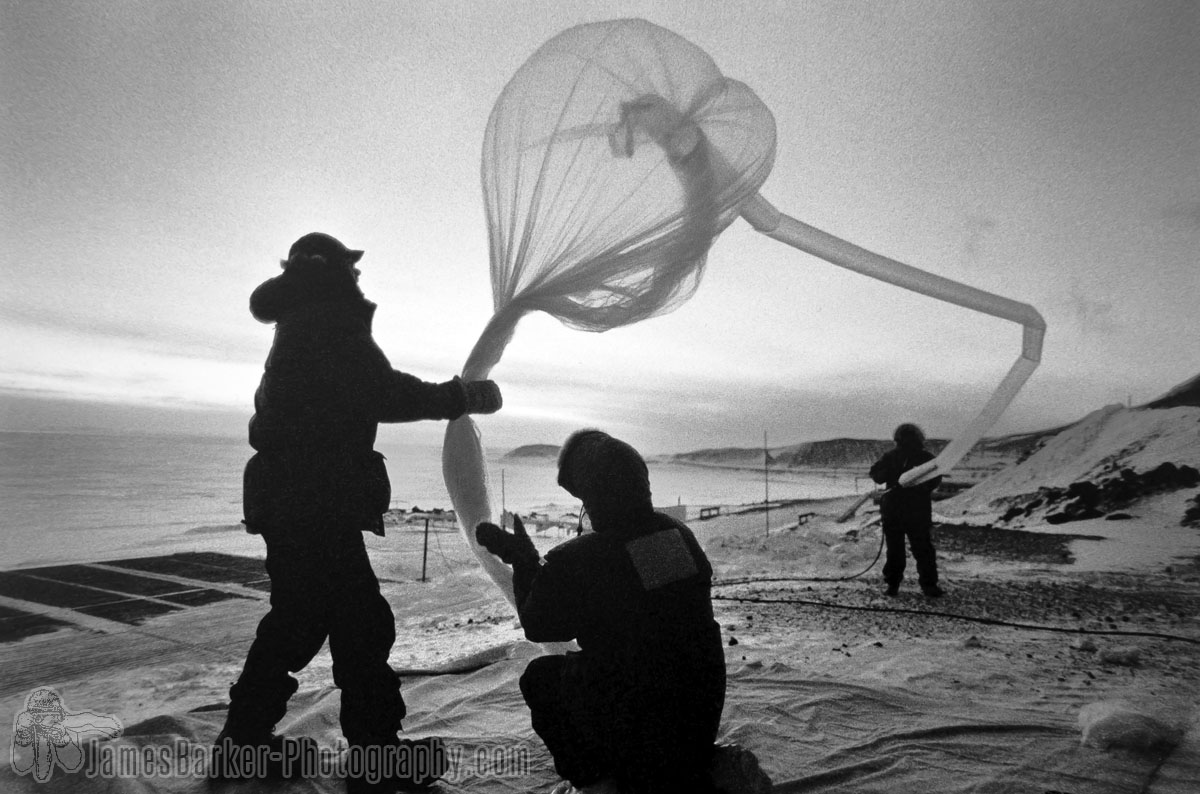
—Dr. Kathleen Conlan8880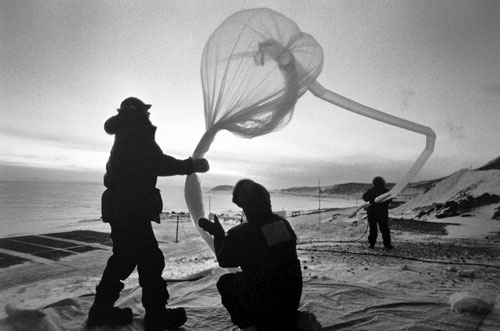 Evening ozone detecting balloon deployment — McMurdo Station, Antarctica8890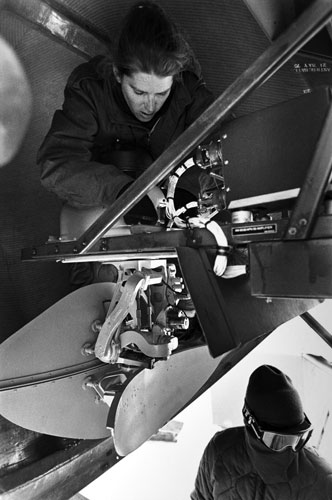
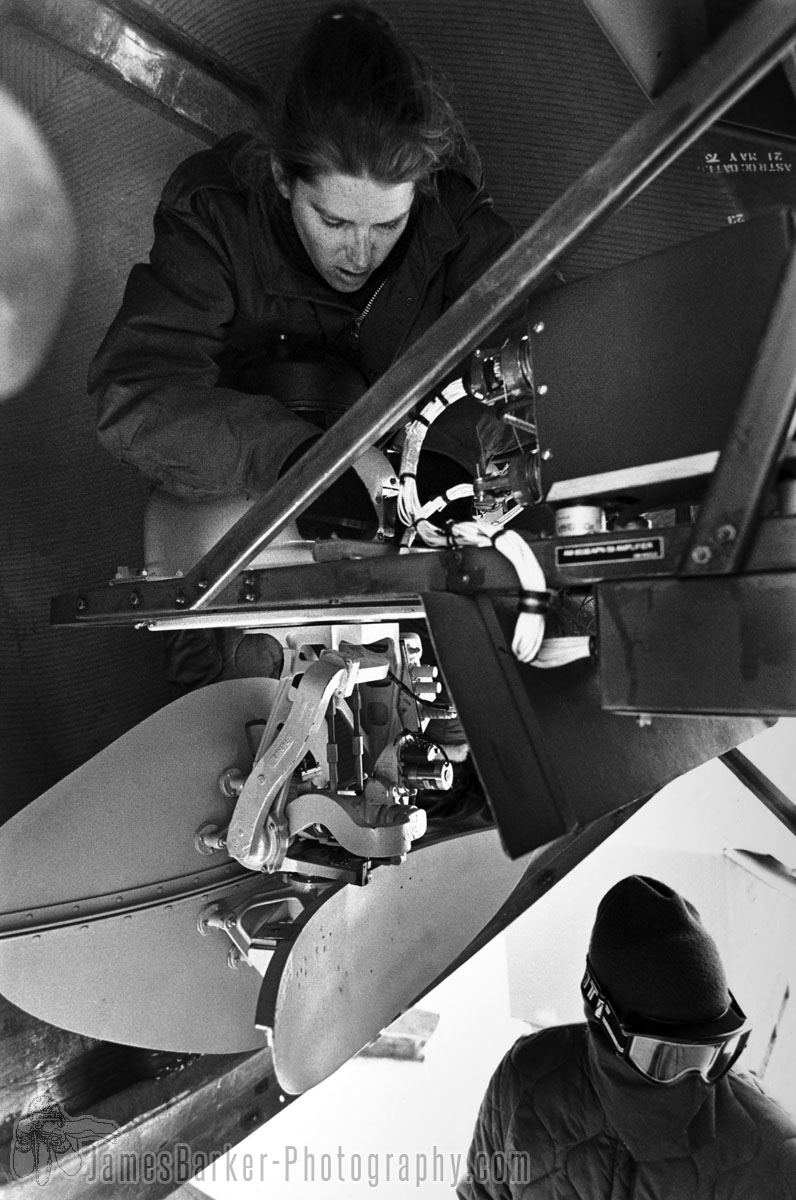
Navy VXE-6 crew changes out a radar unit in the nose of a LC-130 at McMurdo.
“When we have extremely low temperatures, say 50 below or lower, we start having problems with hydraulic system seals leaking, particularly in the propeller system. In fact 50 below F is our fence. We won’t fly to the pole until the temperatures reach 49.9 and higher. Something else we are particularly concerned about down here is the condition of the landing gear and the ability of the strut system to absorb the shock when we land on skis out here.”
—Naval Officer Gary Iverson8873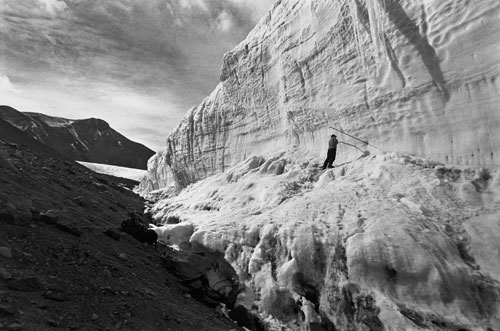
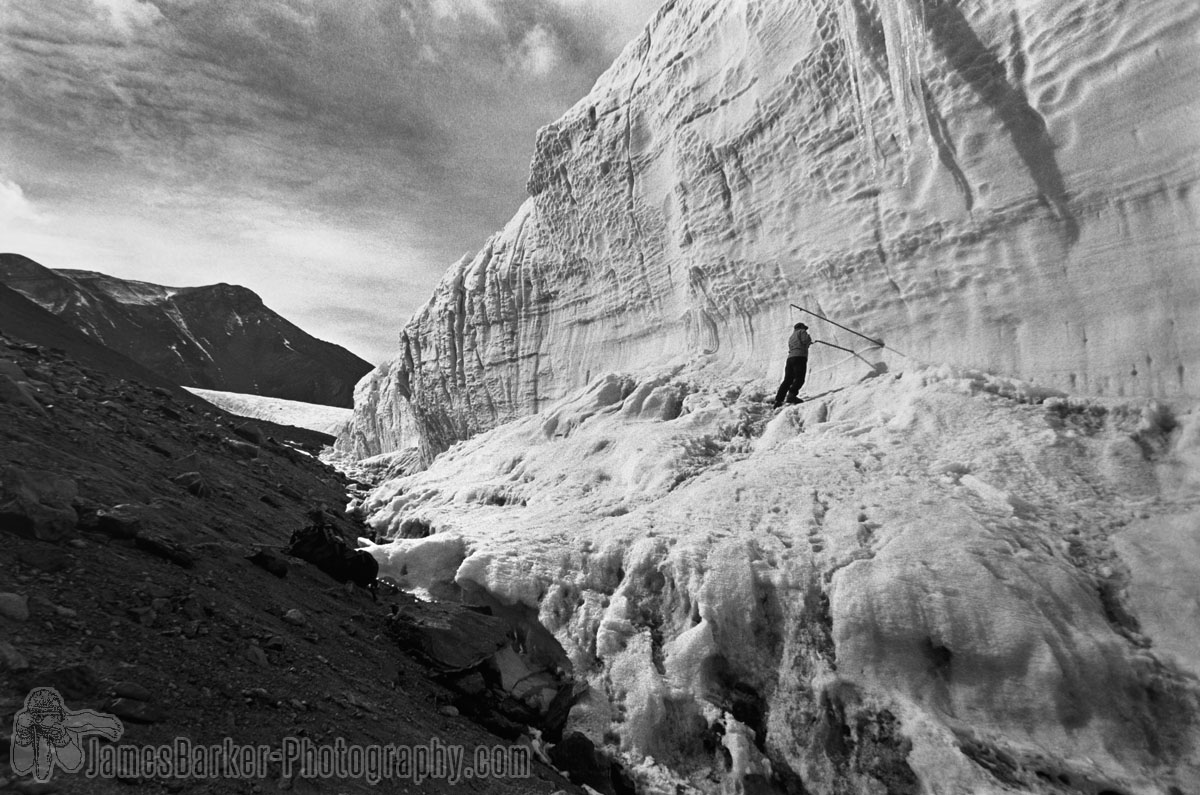
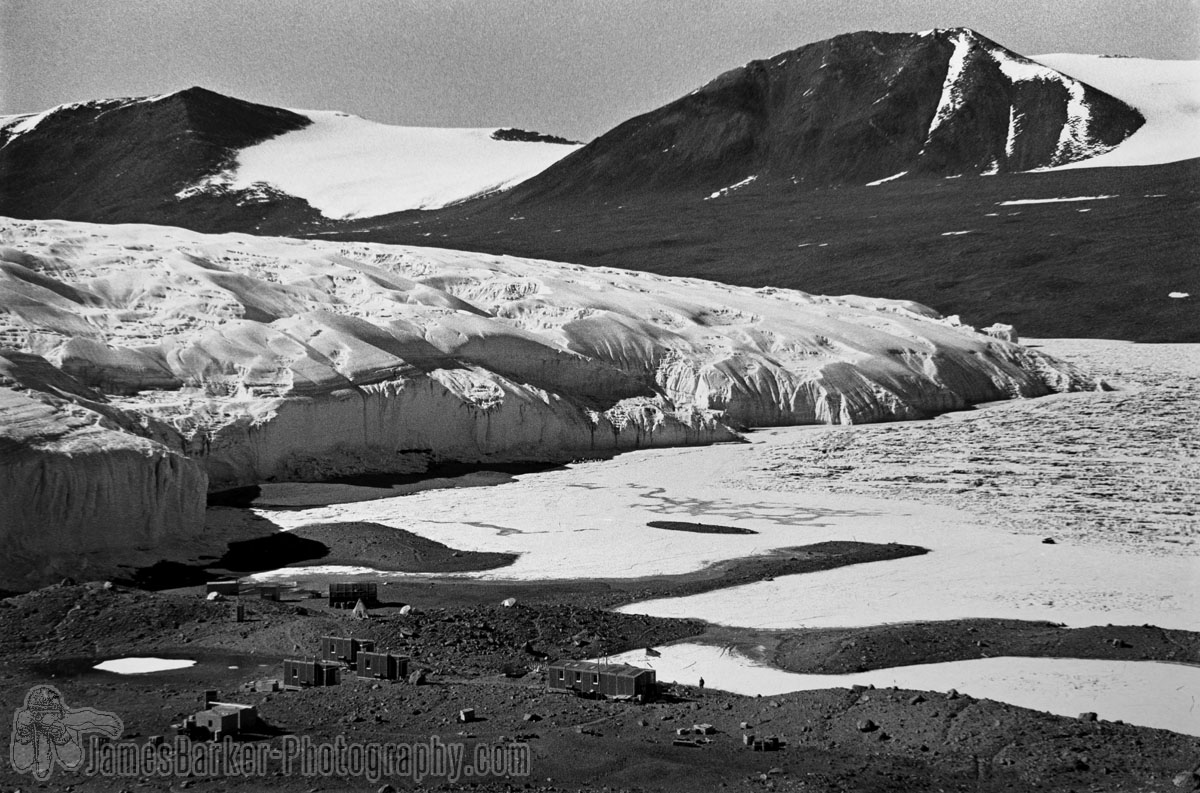
Paul Langevin drills into the Canada Glacier near Lake Hoare.
“These glaciers are important in the Taylor Valley. We look at the streams flowing from the glaciers and the change of mass of the glacier. When I first came there was a sense of surrealness of the place. All the normal elements I knew like mountains, sun, and glaciers were here. But it’s different, it’s untouched by water so you have features that have been here for hundreds of thousands of years that normally wouldn’t survive. And because there is no vegetation, there is no scale: you don’t know how far away things are.”
—Paul Langevin8874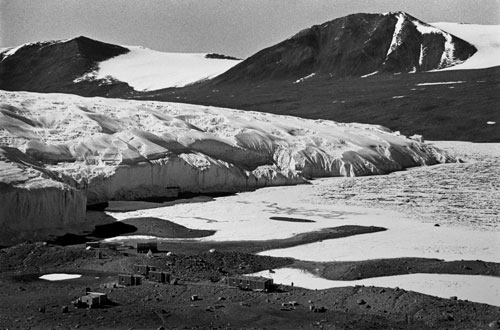
Lake Hoare camp is situated in the Taylor Valley beside the Canada Glacier and is across the sound from McMurdo Station.
“The first time I came down I was just blown away. It was far more beautiful than I expected. Then last season I came here on Winfly at the end of August. It was minus 40 and minus 50. The helicopters can’t shut down of course. The work was really hard. Everything, I mean everything broke on us. We broke gas lines. Things wouldn’t start of course. It was really cold, but you get used to it.”
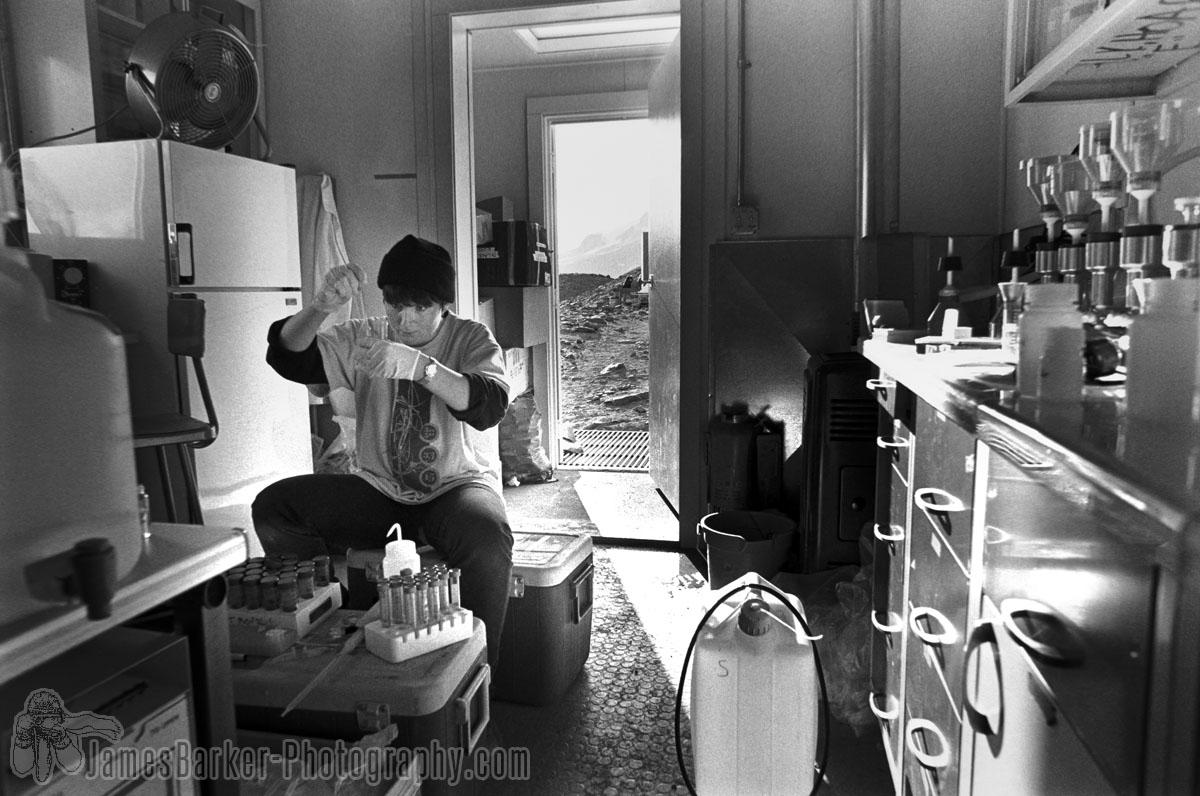
—Christina Takacs, bacteriologist“These lakes are stratified and there are layers. There doesn’t appear to be a spring and fall ’turn over’ like most lakes. You can move just half a meter higher or lower and there are two orders of magnitude less abundance of microorganisms. And yet the temperature of the water from top to bottom ranges just from 0 to 3 or 4 C.”
—Dr. Ray Kepner8871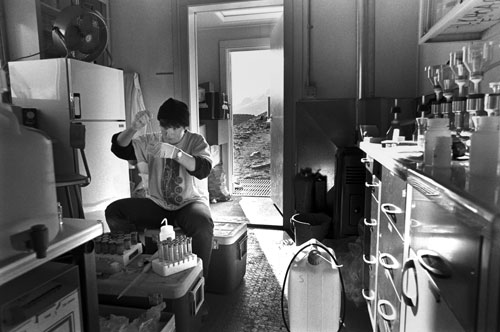 Limnology is the study of fresh water lakes. Surprisingly, Antarctic lakes in the dry valleys are warmest at the bottom. This Limnologist prepares water samples.8881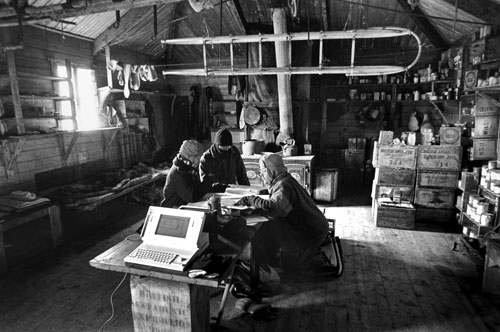
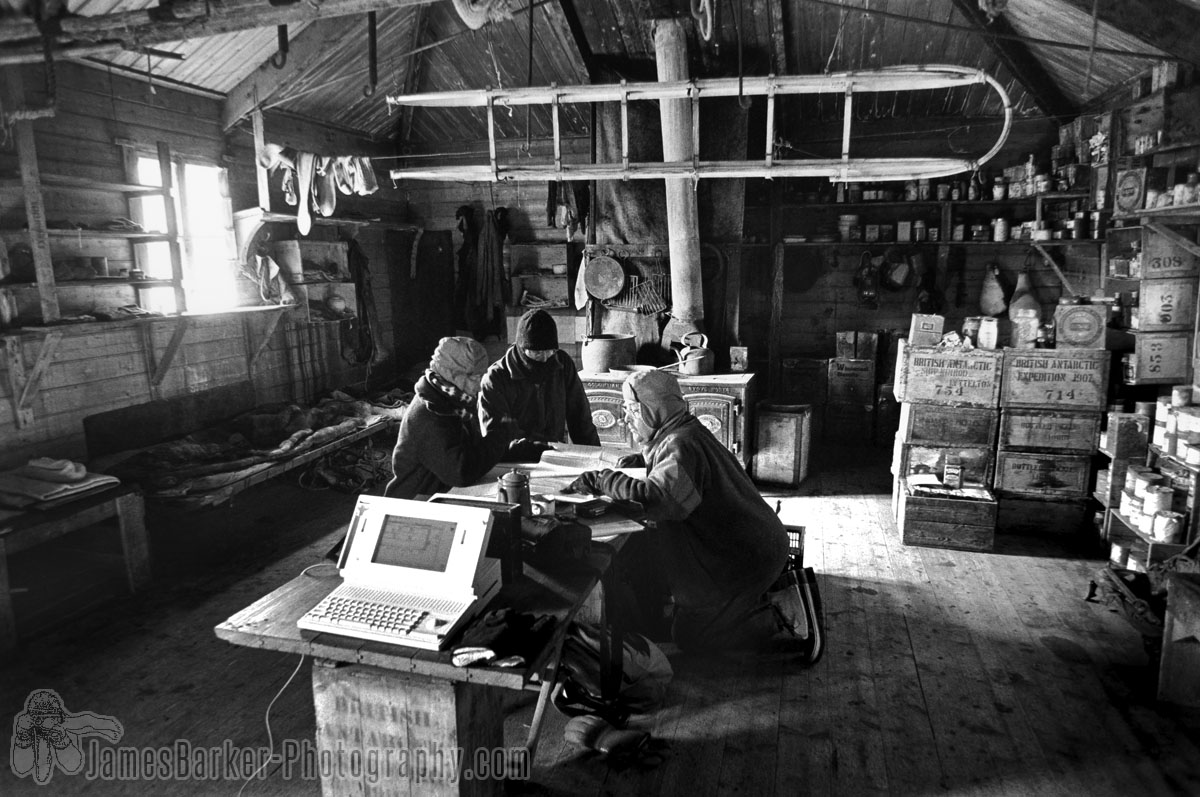
Members of the New Zealand-based Antarctic Heritage Trust discuss the preservation of artifacts in Shackleton’s hut, built at Cape Royds in 1908.
“In 1949 my father moved us to Oamaru, south of Christchurch. That was where the first news of Scot’s death was sent around the world. This history fired up my interest in Antarctica. We have everything on inventory. Through detailed research of expedition stores lists it’s possible to source material because much has been moved from one building to another by early expedition people themselves.”
—David Harrowfield (right)8887

To Mt. Erebus
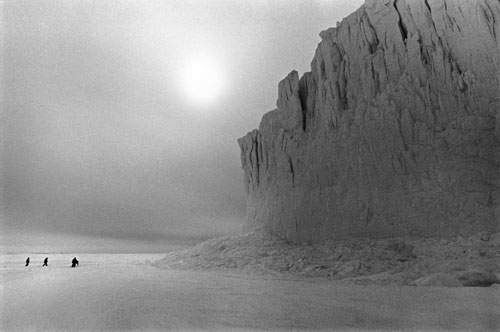
The Barne Glacier sweeps down the slopes of Mt. Erebus and ends at McMurdo Sound.
“April is the best month out of the year down here. It’s a two-week-long sunset. I was working down at the old aquarium building by the ocean, looking out those windows. The sky was red for two weeks. You can sit on Hut Point and hear seals breathing through their blowholes way out to sea because it’s so quiet. Just everything travels right across."
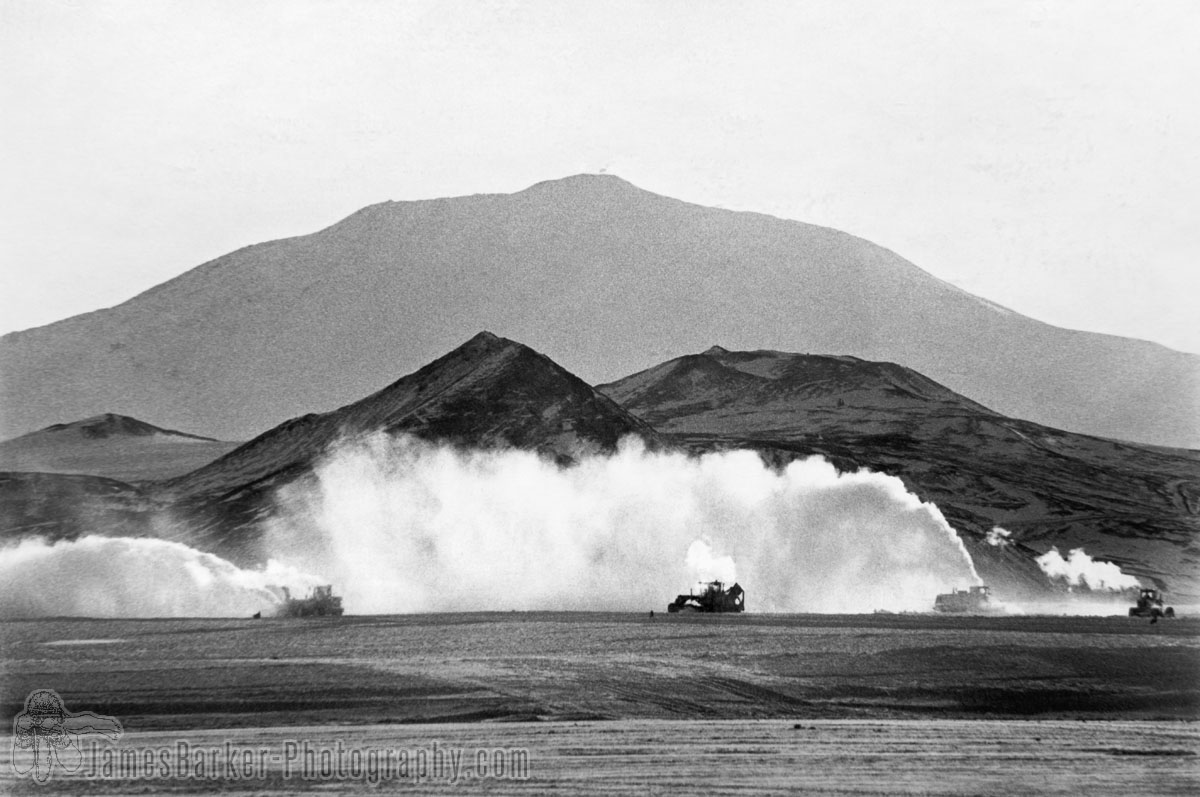
—Harry House8883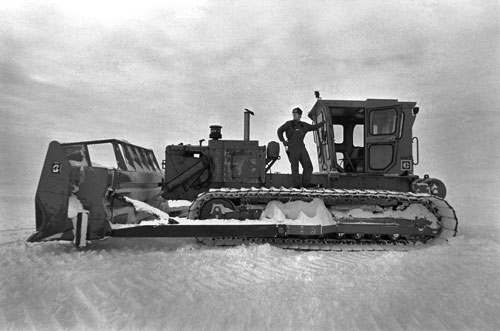 Antarctic science requires many types of machinery and the workers: to fix them, to clear runways, set up field stations, clean the place and make cookies.8898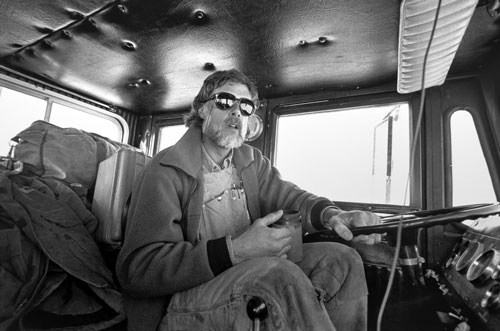
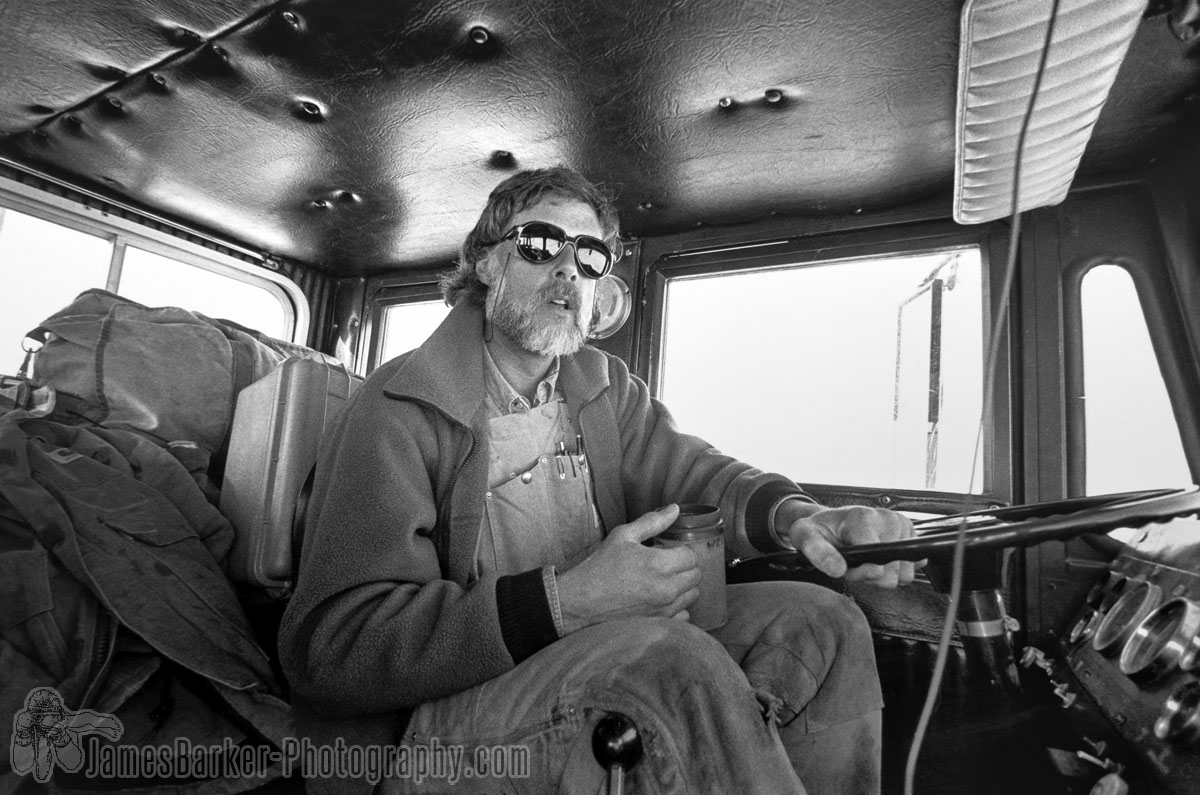
John Wright, leader of a truck convoy, makes a "traverse" over the sea ice 60 miles from McMurdo Station to Marble Point.
"We come in on Winfly in late August and look at the cracks in the ice and lay out the best routes we can. Then we mark it with flags and program the route on our GPS units. We often get into bad weather out here. Sometimes we don’t even bother to clear the windshields. We just follow the GPS and watch the flags go by."
—John Wright8886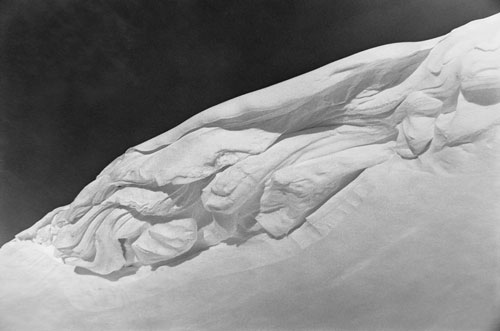 For long traverses, multiple vehicles are used for safety. The trip is made "caravan style" by snow machine by strictly following trail markers in a straight line. If a vehicle gets off of the line, they appear scattered and hard to follow.8899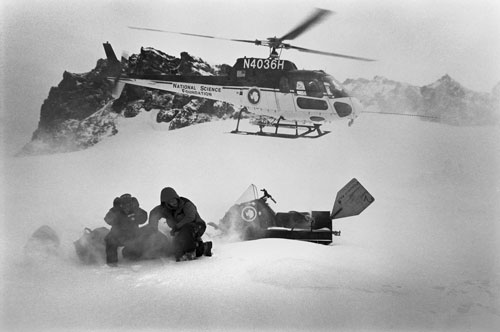
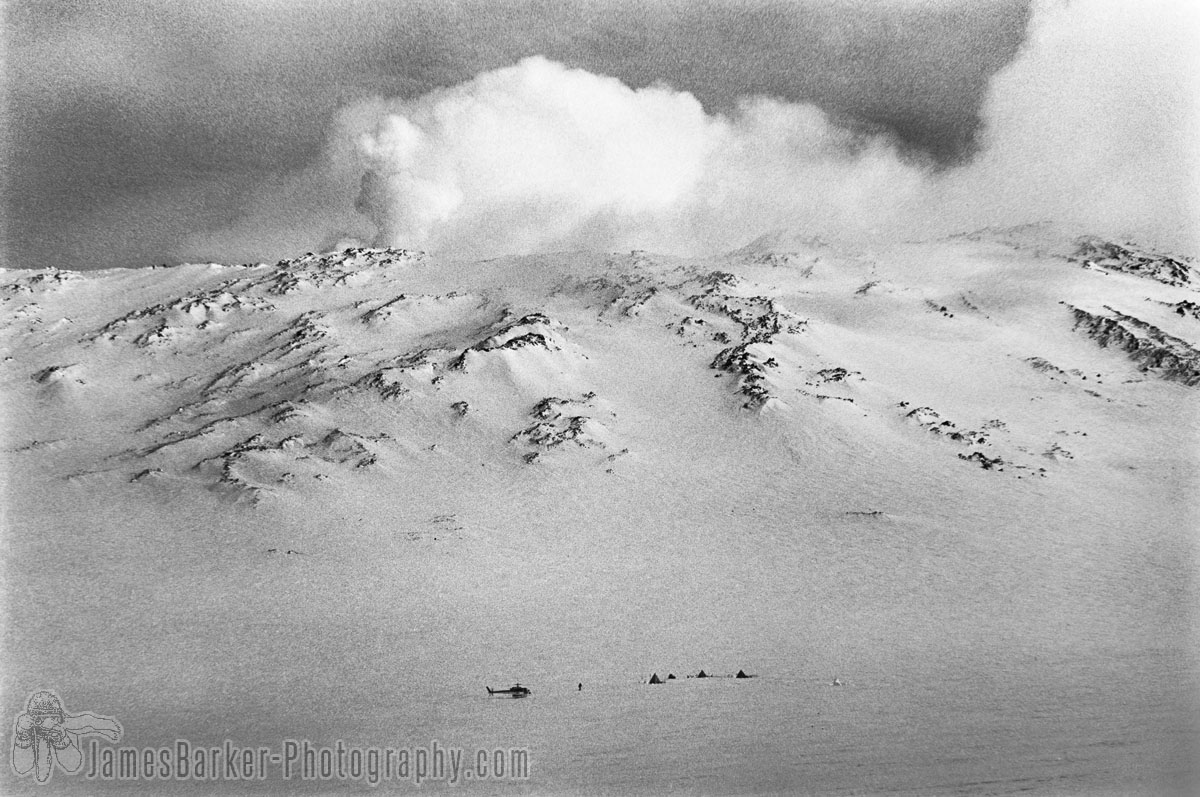
Volcanologists Adam Maciajewski and Kurt Panter land at the Fang Glacier acclimatization camp at 9,400 feet on Mt. Erebus, A three-day stay is required before ascending to the hut at 11,400 feet and the summit.
"We are driven here by science. Our scientific questions have changed. Now there’s less interest in volcanoes per se and, at least in my mind, more interest in the impact of the volcano on the Antarctic environment. We are looking at the air samples at the South Pole to see if we can find signatures of Erebus gas there. This is my 25 field season, my 24th on Erebus. I just wish there was some young upstart that would push me aside and take the place over. But you get a little bit of territory and it’s ’my little bit of territory.’"
—Dr. Philip Kyle8889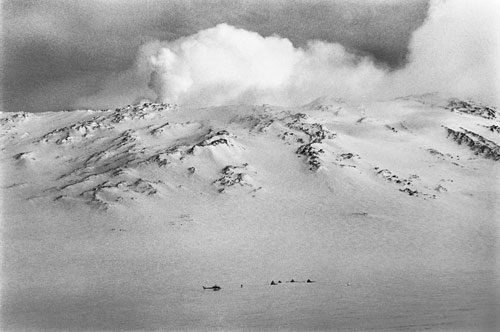 "I climbed up a slope to get a photo of the acclimatization camp. Everywhere I went, I was accompanied by a safety specialist. We had to go the second part of the way up by snow machine on a very steep slope, a dangerously tricky drive. After a bit, my minder asked me to take over because I was more experienced driving snow machines."
—James Barker8885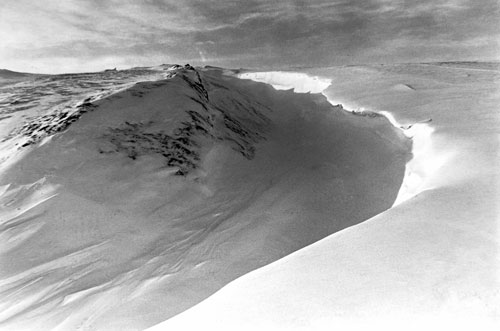 Each day the science team climbs up to the edge of the crater. The camp is a bit below the crater because the volcano occasionally bombards the rim with lava bombs. They are made of "Erebus crystals", a form of felspar, referred to by the scienstists as "Antarctichite."8894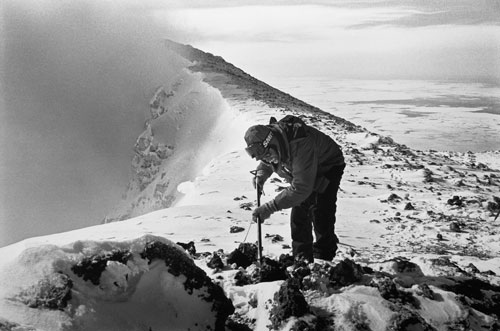
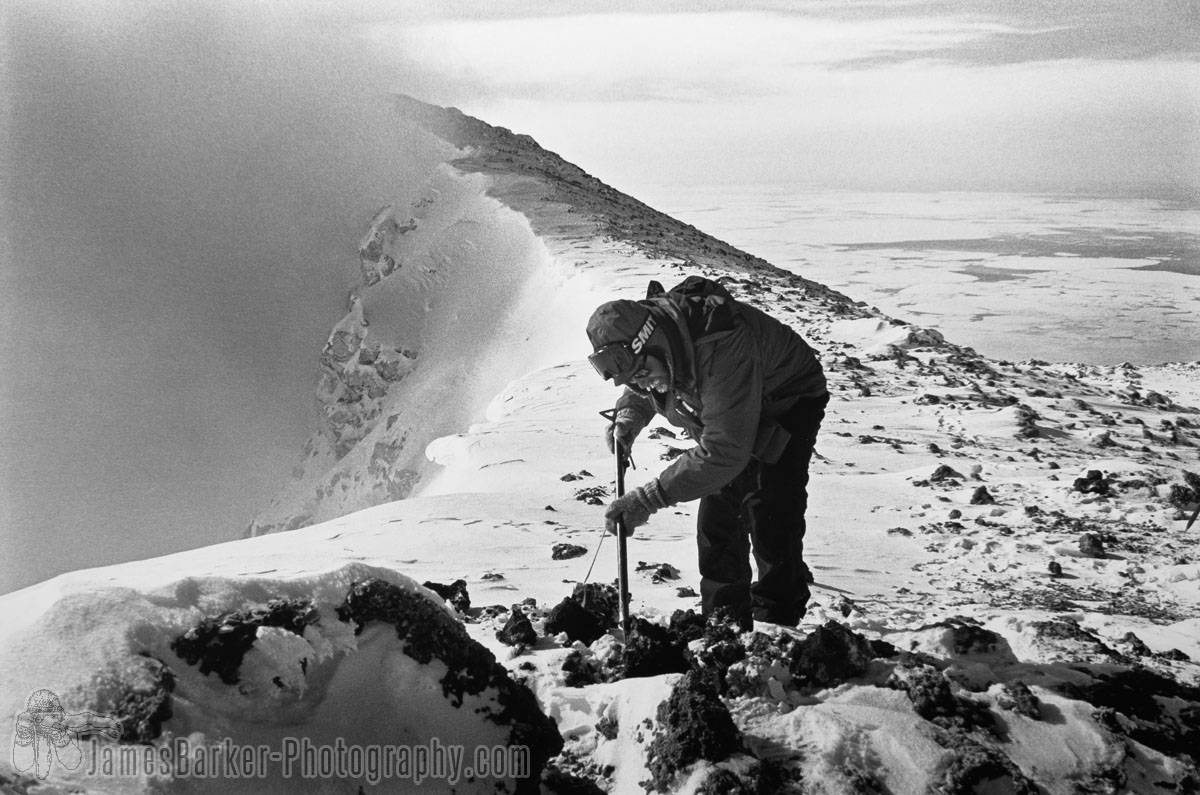
Volcanologist Michael O’Keefe examines the contents of a lava "bomb" at the 12,400 foot summit of Mt. Erebus.
"In 1984 the seismometers on the mountain were going wild. People on the other side of the Sound could see the bombs flying through the air in the night. Within thirty minutes after arriving on The Ice I was standing by the upper hut on Erebus. I walked just a few feet from the helicopter and there sitting on the ground was a lava bomb six feet across, smoldering. I jumped in the helo and said, ’Let’s get the hell out of here!’"
—Dr. Philip Kyle8884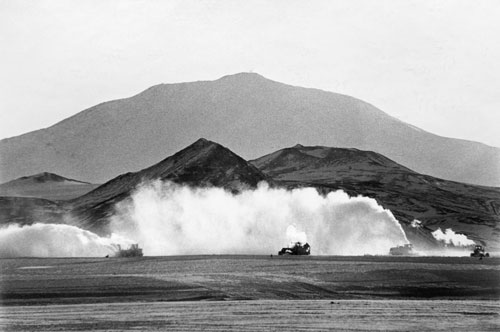 From the rim, the scientists get a good look at the lava lake below. Some even rappel far down the steep slope.8900
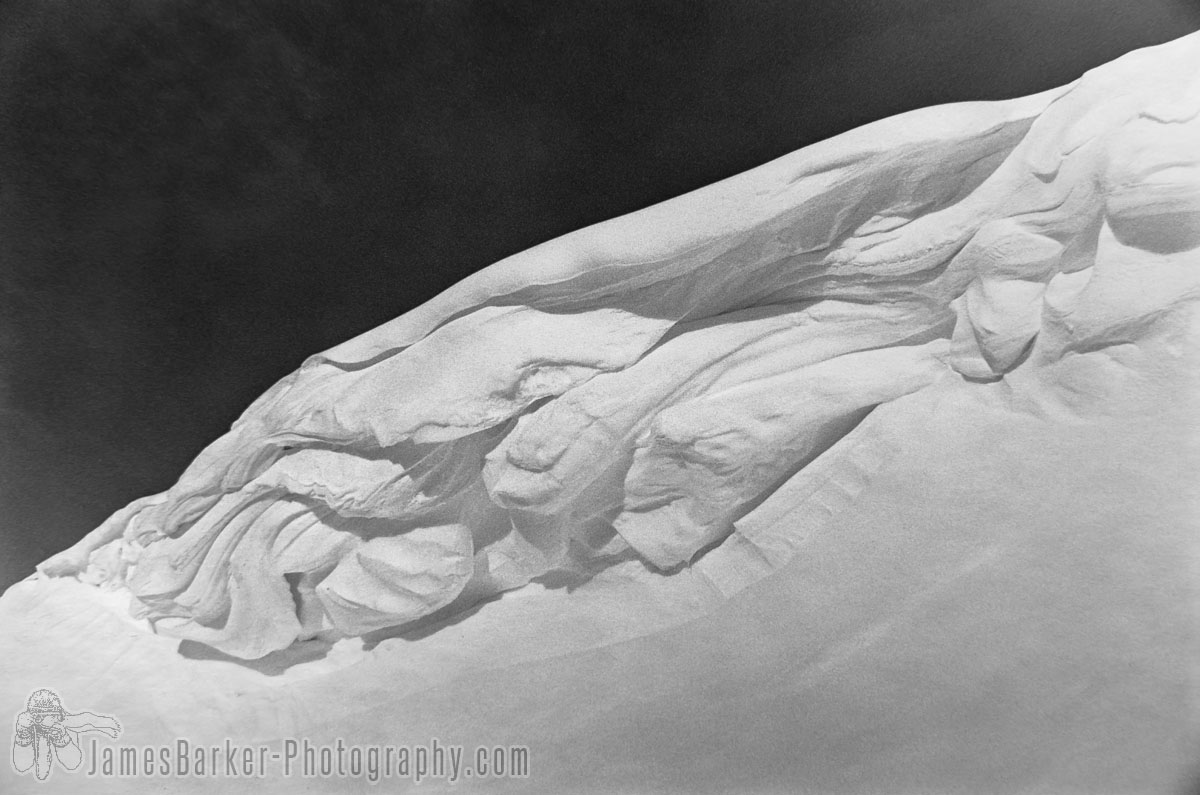
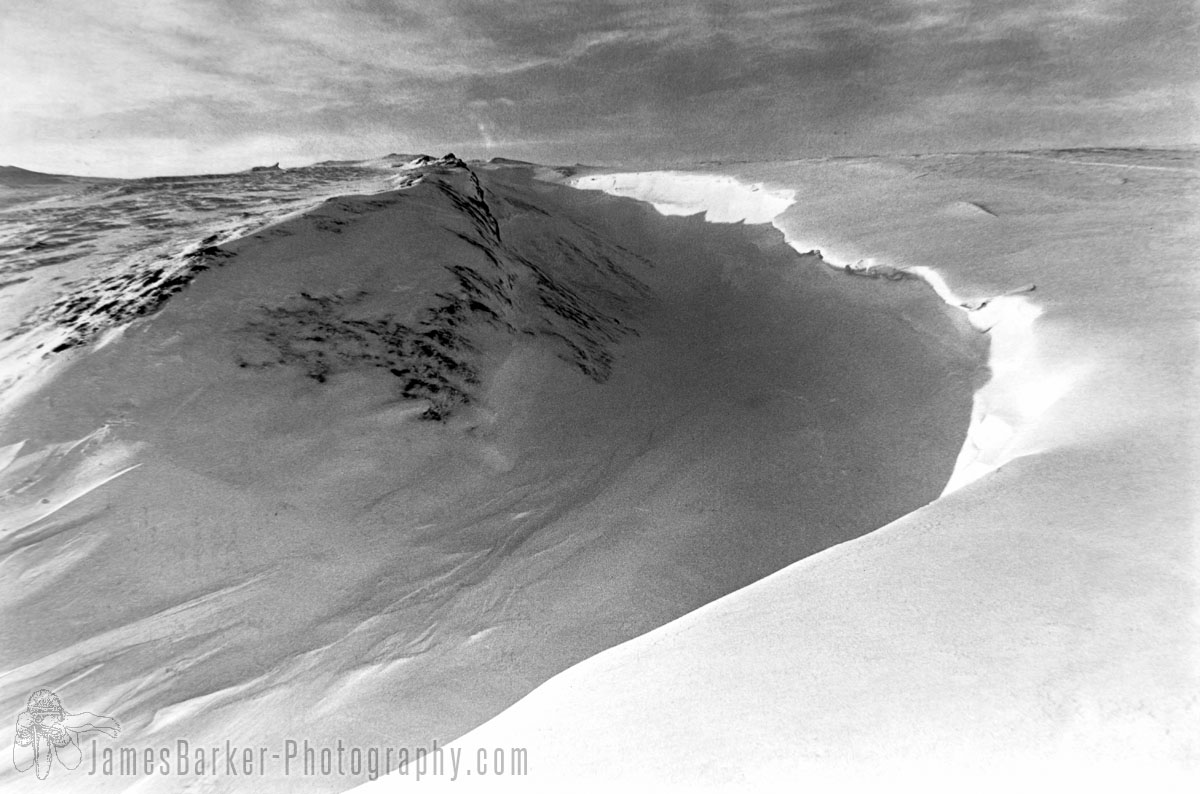
- Everywhere, the deep snow creates spectacular forms.8899
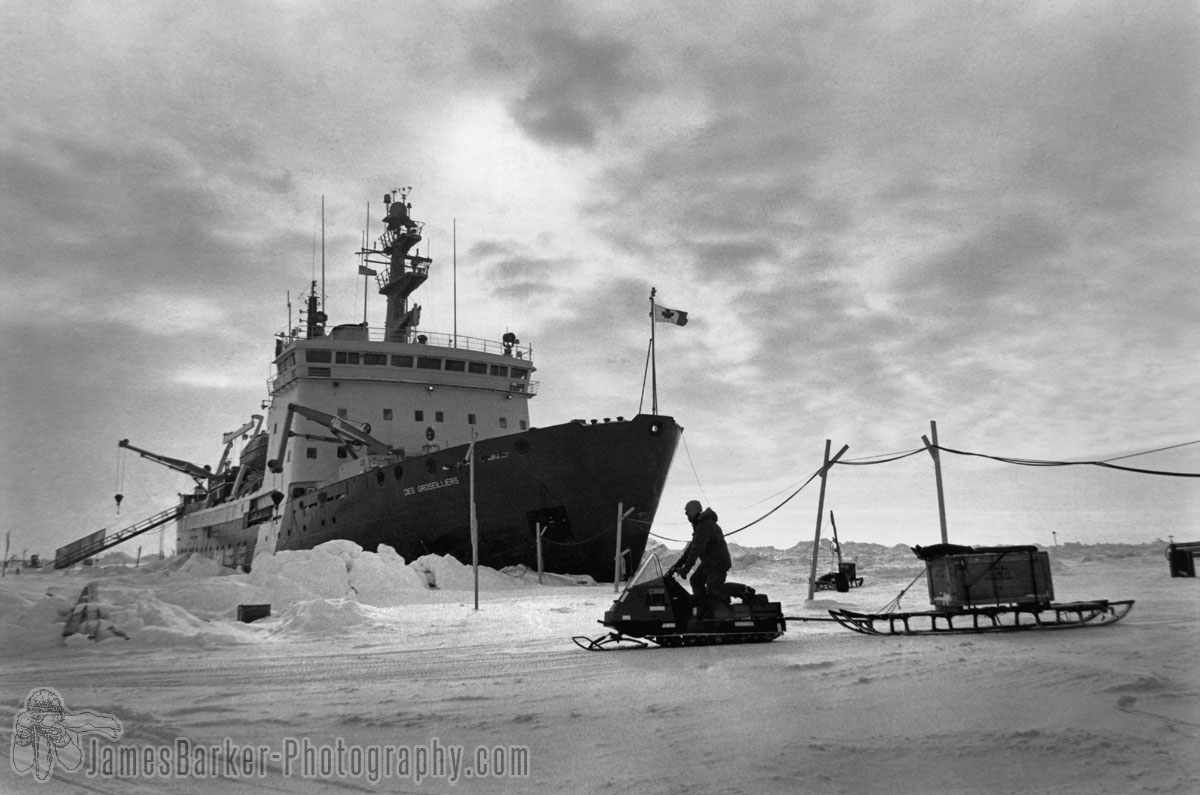
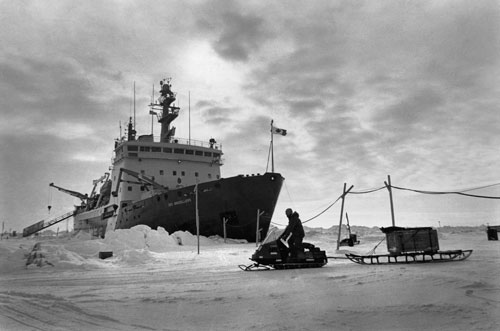 Occasionally ice breakers deliver needed supplies. Vehicles pick the deliveries up and ferry them back to McMurdo.8895
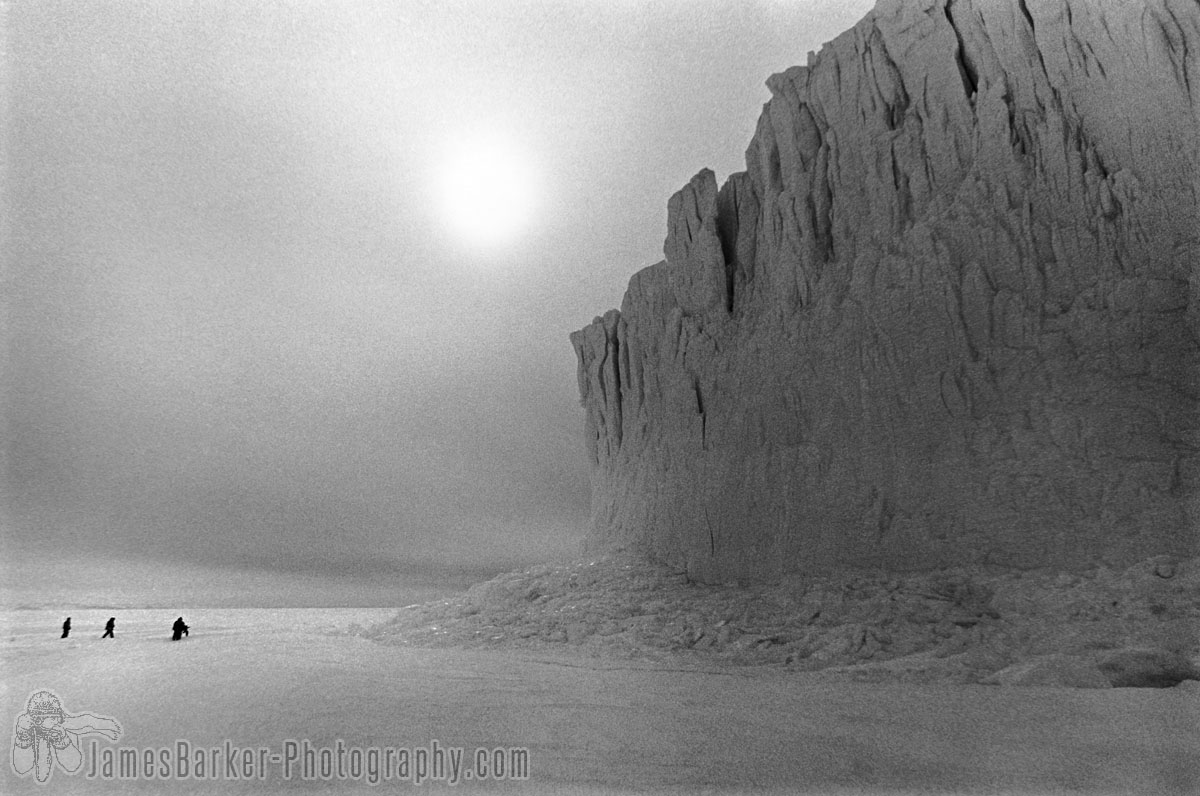
Remote Camps
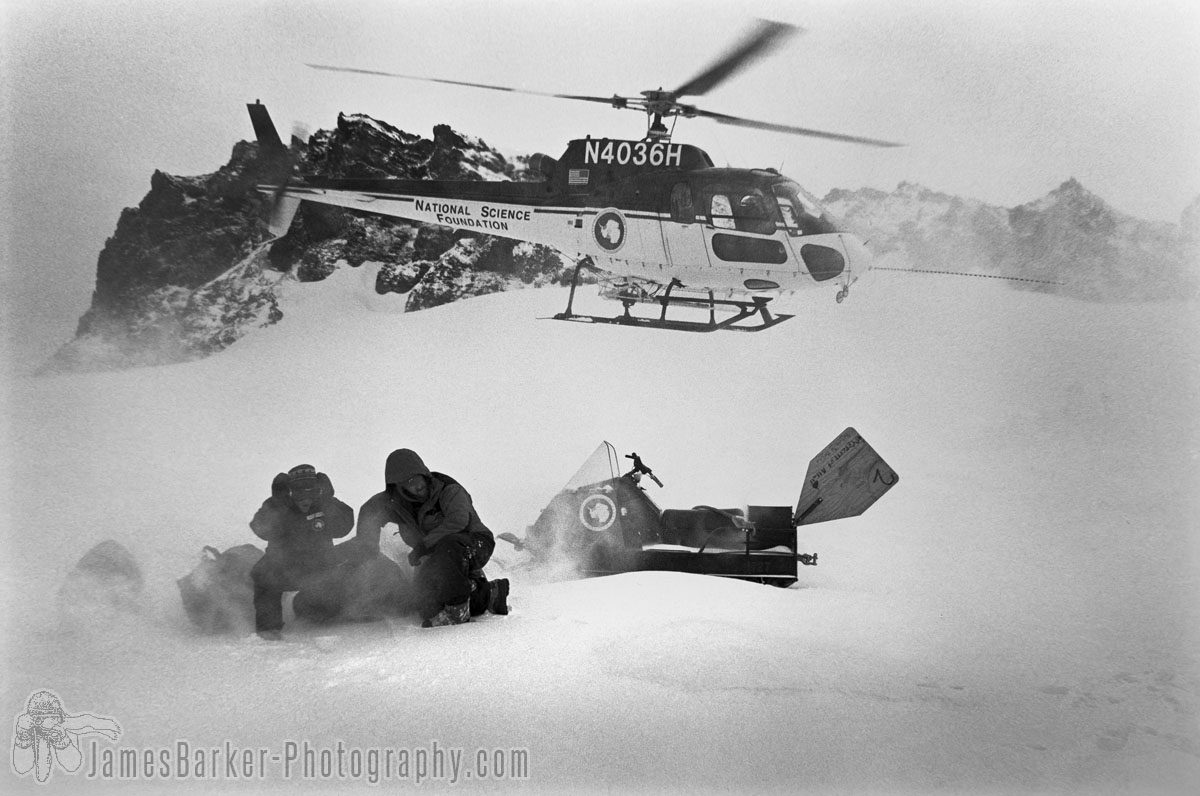
 Scientific equipment and materials are flown to setup remote research camps.8893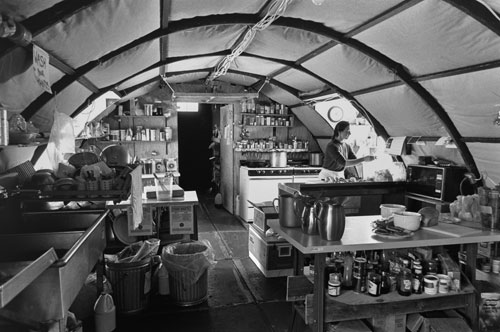
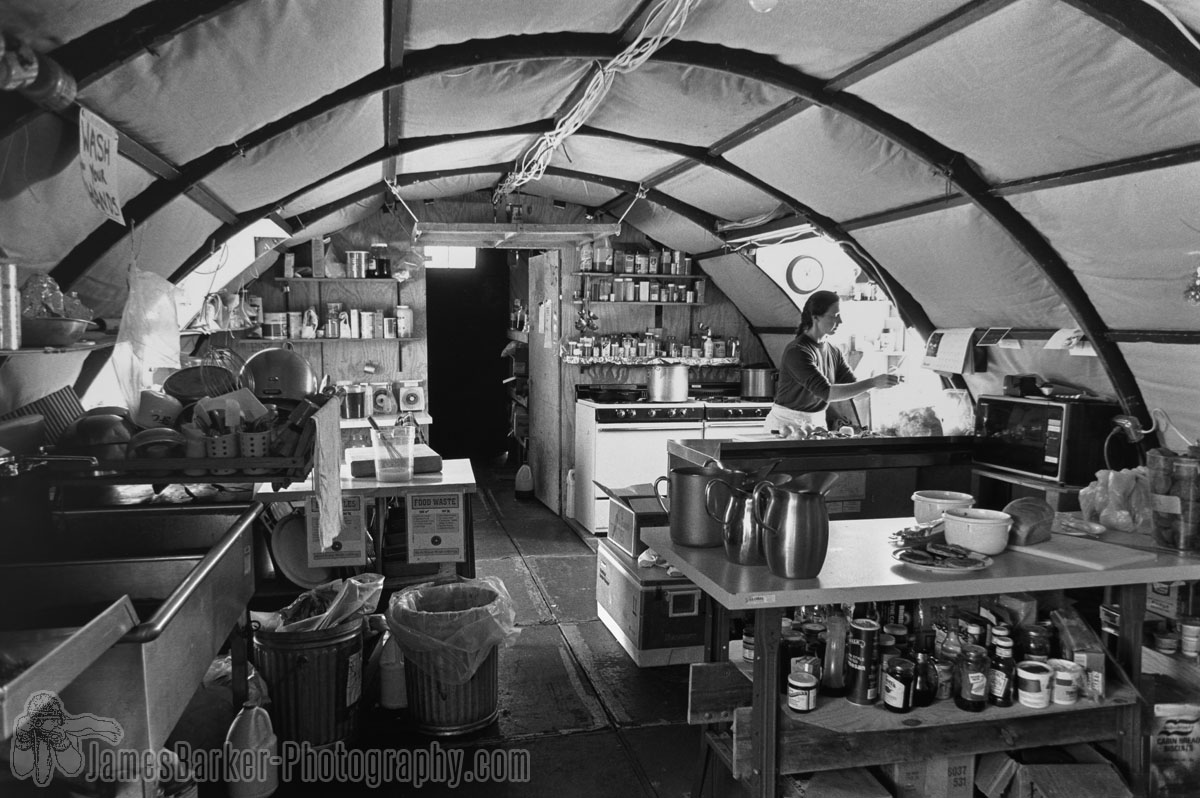
Tanya Zastrow prepares lunch in the Siple Dome galley. Located 600 miles east of McMurdo, this "Jamesway" was assembled as part of a temporary camp hurriedly assembled to accommodate 50 people for the season.
"When they first flew us in it was 35 below F and cold; windy and cold. On a ’put-in’ the first thing you do is go for creature comforts. You get the tents up, shelter and food. Everything was buried, just the pallets sticking out. There’s a certain amount that just has to be done quickly because it is so damn cold. The galley is always the first building you put up. Jay Burnside, the construction foreman, is a driven, hardworking, ’balls to the wall’ sort of guy, so everybody he picks for a put-in tends to be that way."
—Richard Flanders, Siple Dome camp manager8877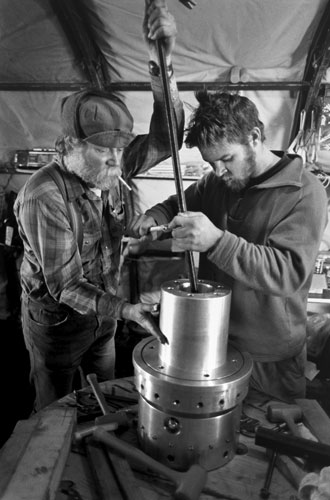
Ice core drillers, Dave Giles and lan Dolman repair a drill motor at Siple Dome on the western ice sheet.
"The thickness of the ice here, according to radar, is 980 meters. They get the oldest ice. The longest record here is over 30,000 years. The snowfall here is greater than inland, more ice per layer, which gives better resolution for the time period." Dave Giles (left)
"The ice cores also show ash layers from volcanoes. Major eruptions caused climate changes so an ice core can show the cause and effects of global conditions."
—Dr. Philip Kyle8878
South Pole Station
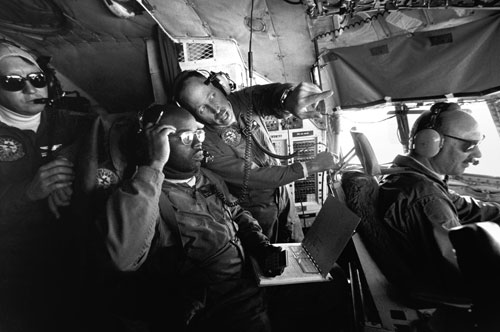
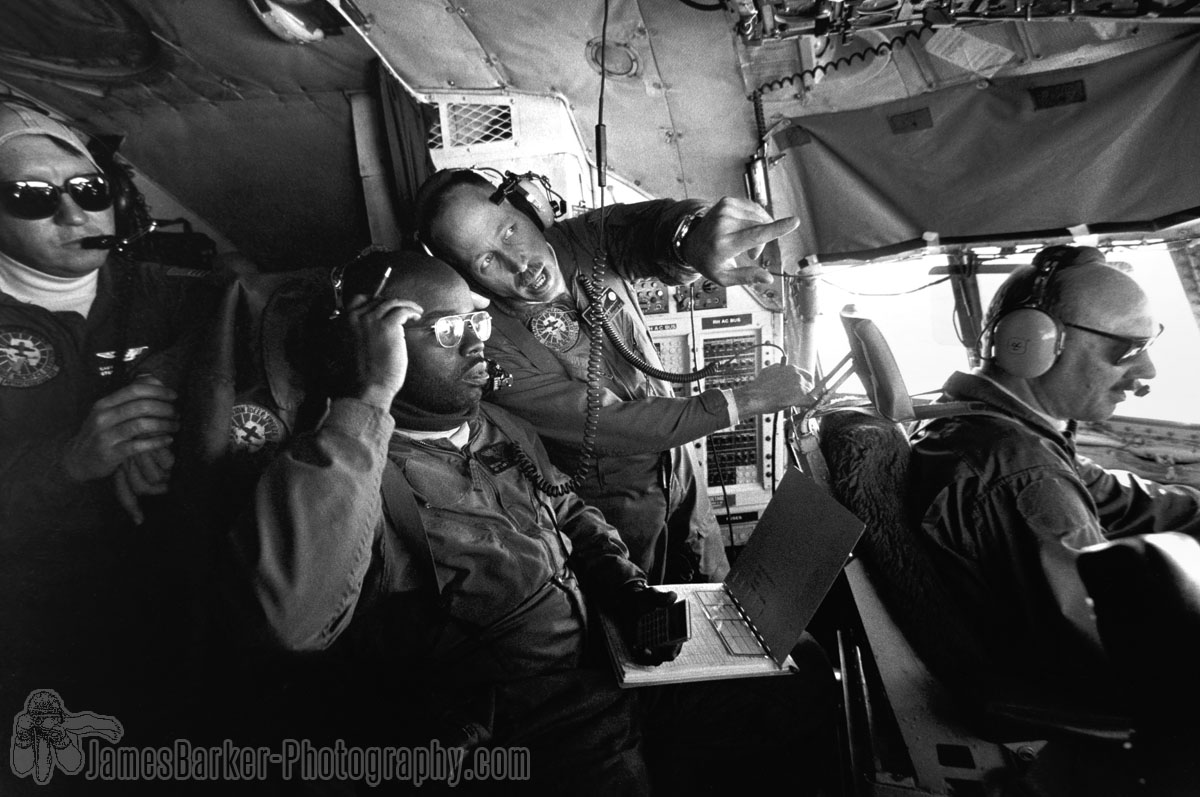
The crew confers on the flight deck of a LC-130 en route to the South Pole Station in one of the season’s 146 scheduled flights.
"Our morale here is typically pretty high because we’re all so close together, more like a family unit. We are very disappointed that the Navy has decided after 40 years in Antarctica to withdraw. It’s a real strong tradition here. For the most part the flights to the pole are seen as routine flights by the crew. To them it’s just another flight. In fact, we have a saying, ’Rickety rack, to the pole and back’."
—Naval Officer Gary Iverson (far left)8872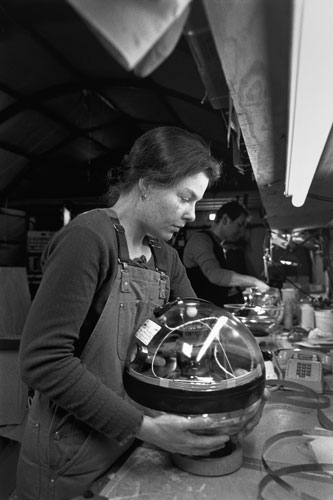
Eva Dahlberg of Sweden seals up an AMANDA Project photo multiplier. Strings of these multipliers will be sunk over a mile into the ice to detect neutrinos passing through the earth.
"I was finishing a physics degree at Leeds. One of my professors said, ’Why don’t you work for me: We’re involved in cosmic rays at a sheep farm at Leeds or at the South Pole. Every Friday at the pub I said, ’Let me go to the South Pole; I’ve got to go to the South Pole.’ Ever since I came down for the summer I said, ’I want to winter?’ So then he said that I could winter so long as I finish my Ph.D. first. So I finished my Ph.D. and a few weeks later I was flying down to winter over."
—Dr. Simon Hart, U.K.8876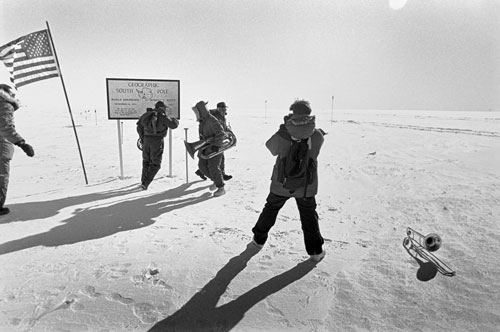
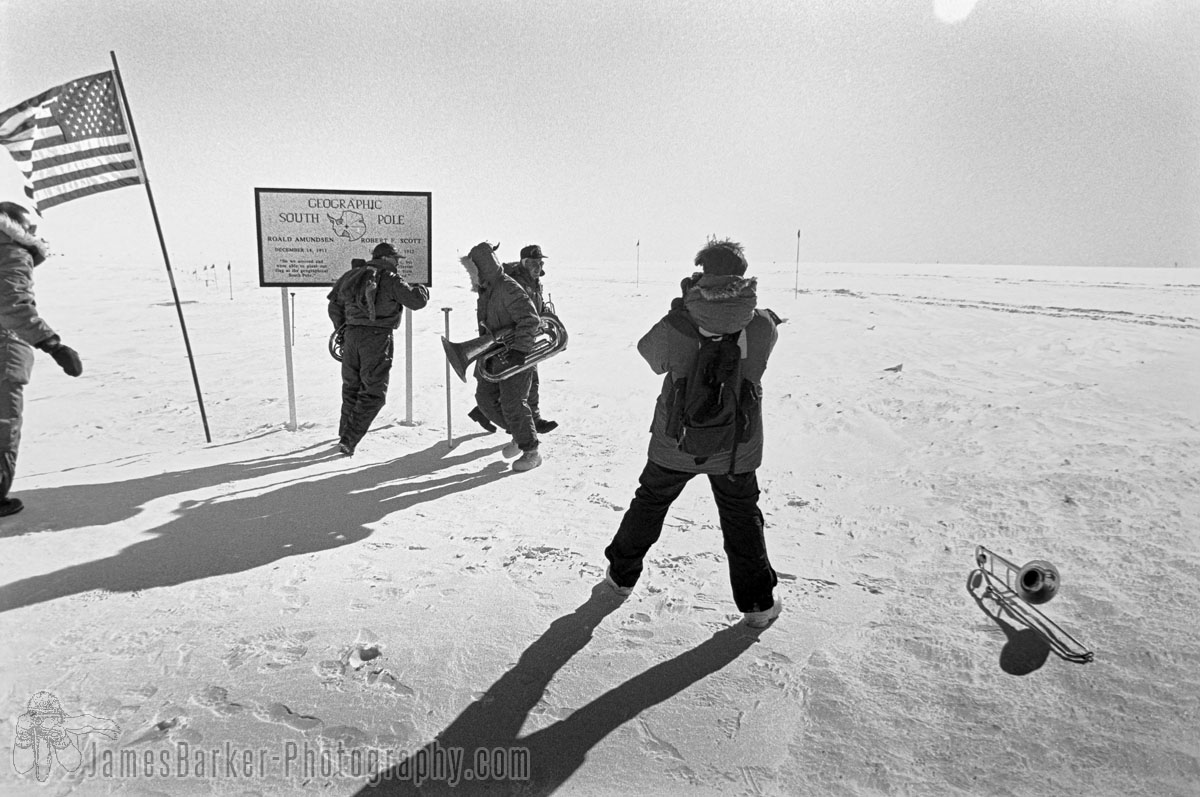
Near Christmas a Navy quintet hitches a ride to the pole to play a quick concert of carols while the plane is unloading. It’s a struggle to play wind instruments at that altitude but they really had to see the pole.
"We are on deck at the pole for 45 minutes or an hour. Sometimes we carry a box of flags. We pull out each flag and hold it over the pole a couple seconds, just long enough to let the winds blow through them. These are flown back to the States and are presented to people at ceremonies as ’flags that have flown over the South Pole."
—Naval Officer Gary Iverson8882